
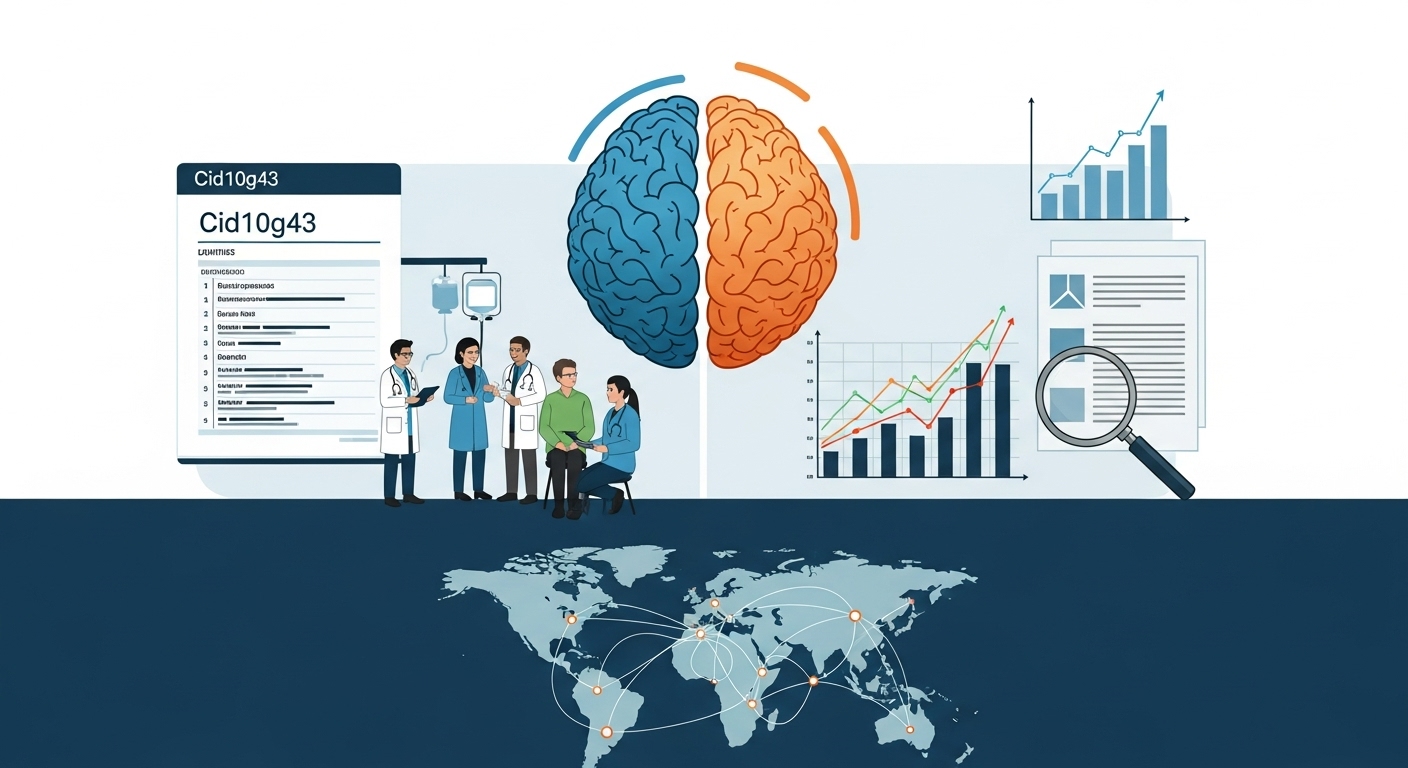
In the complex world of medical coding, every alphanumeric combination holds a specific purpose. One such example is Cid10g43, a code that plays a key role in diagnosing and classifying certain medical conditions. Although it may seem like a random combination of letters and numbers, Cid10g43 carries significant importance in the healthcare and clinical documentation sectors. Understanding what it represents and how it’s used can help medical professionals, researchers, and even patients navigate the healthcare system more effectively.
What Is Cid10g43?
Cid10g43 refers to a diagnostic classification code within the ICD-10 system (International Classification of Diseases, 10th Revision). Each ICD-10 code is designed to represent a specific health condition, allowing healthcare providers and insurers to communicate clearly and accurately about diagnoses. Cid10g43 is commonly associated with a type of neurological disorder that involves recurring headaches and sensory disturbances—often pointing toward migraine-related conditions.
The primary purpose of Cid10g43 is to standardize how such disorders are identified and recorded in medical records. By using Cid10g43, doctors, hospitals, and insurance companies ensure that the same diagnosis is understood consistently across different systems and countries.
The Importance of Cid10g43 in Medical Practice
In today’s digital healthcare environment, medical data accuracy is essential. Cid10g43 helps create a unified language between physicians, researchers, and administrative systems. It ensures that every report, claim, and analysis based on patient data aligns with international standards.
For doctors, Cid10g43 simplifies the diagnosis and treatment process. It allows them to quickly code a patient’s condition without writing long descriptions. For insurance companies, Cid10g43 ensures that billing and reimbursement are properly processed. For researchers, it provides consistent data that can be used to track patterns and study how neurological conditions evolve over time.
Moreover, Cid10g43 assists healthcare organizations in maintaining accurate patient records. It allows them to monitor treatment outcomes, identify recurrence patterns, and develop better management strategies for conditions related to headaches and neurological symptoms.
Cid10g43 and Its Role in Research and Data Analysis
In medical research, Cid10g43 serves as a powerful tool for categorizing data. When thousands of patient cases are analyzed, researchers rely on uniform coding to detect patterns. By examining large datasets tagged with Cid10g43, they can identify risk factors, common triggers, and treatment effectiveness for migraine-like disorders.
This kind of data-driven insight supports public health initiatives and helps policymakers design preventive strategies. It also allows pharmaceutical companies to test and improve medications targeting specific neurological pathways. Without standardized codes like Cid10g43, such large-scale analysis would be nearly impossible due to inconsistent terminology and data recording methods.
Common Misunderstandings About Cid10g43
Many people assume that Cid10g43 only refers to one specific condition, but in reality, it encompasses a broader category of related neurological symptoms. While migraines are the most common interpretation, the code can cover subtypes depending on the presence of aura, frequency of attacks, or associated symptoms.
Another misconception is that Cid10g43 is only used by hospitals. In fact, it’s also used by private clinics, telemedicine platforms, and health insurance systems worldwide. Its universal recognition makes it a valuable component of the global medical classification framework.
How Professionals Use Cid10g43 Effectively
For healthcare professionals, accurate use of Cid10g43 means more than administrative compliance—it’s a step toward better patient care. Proper coding ensures that patients receive the right treatment plans, that their conditions are tracked correctly, and that research data remains reliable.
Medical coders and billing specialists are trained to apply Cid10g43 with precision. This reduces the risk of misclassification and ensures that every patient record contributes meaningfully to medical knowledge and reimbursement accuracy. When integrated into electronic health record (EHR) systems, Cid10g43 also supports faster, error-free reporting and easier access to clinical data.
Conclusion
Cid10g43 might look like a simple medical code, but its impact on healthcare systems is immense. From ensuring diagnostic clarity to streamlining billing and supporting research, this code plays a vital role in connecting medical practice with data-driven decision-making. By understanding and correctly applying Cid10g43, healthcare professionals uphold international standards and contribute to a more accurate, efficient, and informed medical ecosystem.